
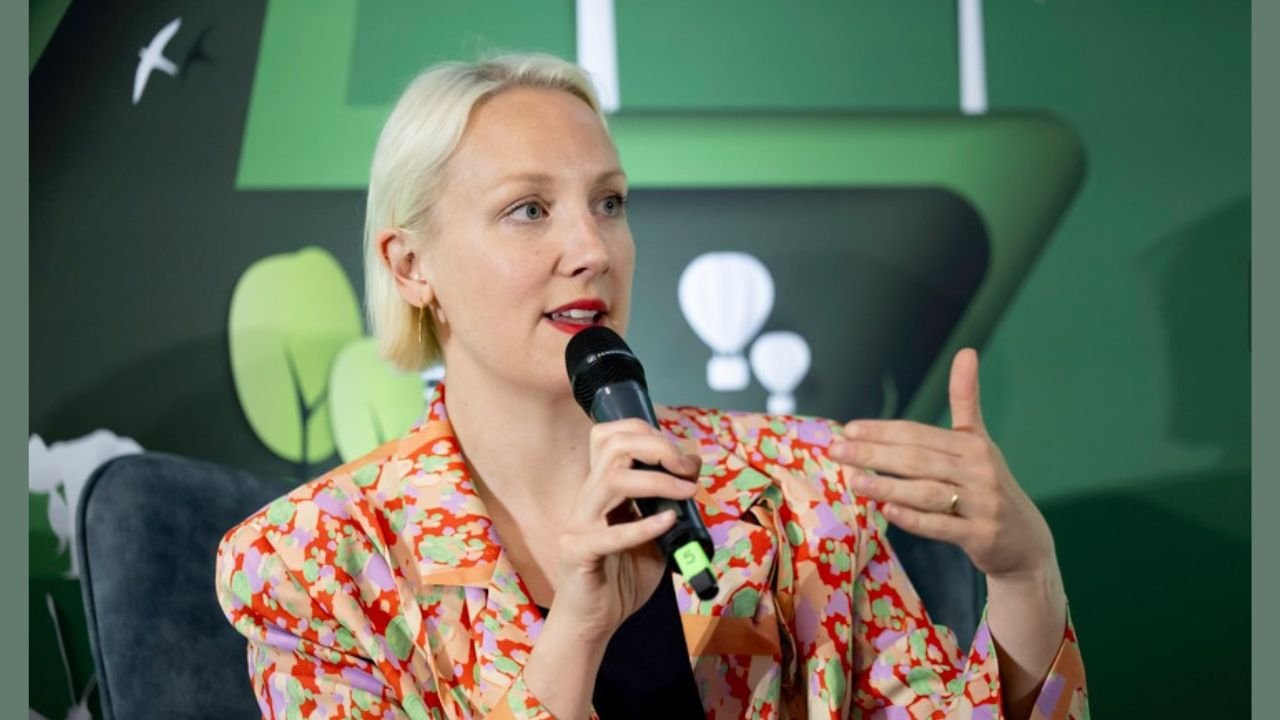
The transition to a sustainable economy requires leaders who can balance complex science with practical economics. Emma Pinchbeck has emerged as a central figure in this journey, guiding the United Kingdom toward its ambitious net-zero targets. Currently serving as the Chief Executive of the Climate Change Committee (CCC), she plays a vital role in advising the government on emissions reductions. This article provides a detailed look at her career, her significant contributions in 2025 and 2026, and her vision for a greener Britain.
The Strategic Role of Emma Pinchbeck at the CCC
In November 2024, Emma Pinchbeck stepped into one of the most influential roles in British environmental policy. As the head of the Climate Change Committee, she leads an independent statutory body established under the Climate Change Act 2008. Her primary responsibility involves providing evidence-based advice to Parliament on carbon budgets and climate risks. Throughout 2025 and 2026, her leadership has focused on the practical delivery of these long-term environmental goals.
Transitioning from her previous leadership at Energy UK, she brought a deep understanding of the private sector to the public watchdog. This experience has allowed her to frame climate action as an economic opportunity rather than a mere regulatory burden. For example, she frequently argues that clean energy technologies like wind and solar are now the cheapest forms of power. Therefore, she advocates for a transition that prioritizes household savings and national energy security alongside emissions cuts.
Navigating the Seventh Carbon Budget
A major milestone for Emma Pinchbeck in early 2026 was the finalization of advice for the Seventh Carbon Budget. This budget sets the legal limit for greenhouse gas emissions in the UK for the period between 2038 and 2042. During various parliamentary hearings in January 2026, she emphasized the need for consistent policy to maintain investor confidence. She believes that the government must provide a “balanced pathway” that accounts for both technological shifts and social fairness.
Moreover, she has highlighted the importance of public buy-in for these long-term targets. In her evidence to the Environmental Audit Committee, she noted that while concern for climate change is high, knowledge about specific solutions remains low. Consequently, she has pushed for better communication from the government regarding technologies like heat pumps and electric vehicles. Her goal is to ensure that the transition feels achievable and beneficial for the average citizen.
Career Foundations and Leadership at Energy UK
Before joining the Climate Change Committee, Emma Pinchbeck served as the Chief Executive of Energy UK for almost five years. During her tenure, she transformed the organization into a “noisier” and more proactive voice for the green transition. She successfully navigated the energy sector through the dual challenges of the global pandemic and the subsequent energy price crisis. Her leadership ensured that the industry remained focused on long-term decarbonization despite short-term market volatility.
Furthermore, she became known for her ability to build bridges between different sectors of the economy. She worked closely with regulators, government ministers, and consumer groups to develop fair energy policies. For instance, she advocated for moving green levies from electricity bills to general taxation to make electric heating more affordable. This pragmatic approach earned her widespread respect and established her as a leading expert in whole-economy decarbonization.
Advocacy for Diversity and Inclusion
Throughout her career, Emma Pinchbeck has been a passionate advocate for improving diversity within the energy and climate sectors. She often speaks about her own experiences as a leader and a mother, sharing childcare responsibilities with her husband. By being open about these personal details, she has inspired a new generation of women to pursue careers in STEM and policy. She believes that a diverse workforce is essential for solving the complex problems posed by climate change.
In addition to her main roles, she has held several board positions that reflect her commitment to innovation. For example, she has served on the advisory board of the UK Energy Research Centre and supported the “Women in Innovation” grant awards. These efforts help ensure that the transition to net zero includes a wide range of perspectives and talents. Therefore, her impact is measured not just in carbon tons, but in the growing inclusivity of the industry.
Climate Adaptation and Risk Management in 2026
While emissions reduction is a priority, Emma Pinchbeck also emphasizes the urgent need for climate adaptation. In 2025 and 2026, the CCC published critical reports highlighting the UK’s vulnerability to extreme weather events. These documents warned that national preparations for flooding, overheating, and disruptions to food production remain inadequate. She has called for a “true cross-government priority” to build national resilience against these rising risks.
Furthermore, she has pushed for the integration of adaptation strategies into all areas of government policy. This includes everything from farming roadmaps to the design of new housing infrastructure. Because the impacts of climate change are already being felt, she argues that we cannot afford to wait. Her leadership at the CCC ensures that the government is held accountable for its promises to protect the public from future environmental shocks.
The Fourth Climate Change Risk Assessment
As we move through 2026, Emma Pinchbeck is overseeing the preparation of the Fourth Climate Change Risk Assessment. This statutory report, due later in the year, will provide a comprehensive independent assessment of the risks facing the UK. It will serve as a foundational document for the government’s next National Adaptation Programme. By using the latest scientific data, she aims to provide a clear roadmap for how the nation can survive and thrive in a warming world.
In addition to technical analysis, she focuses on the economic cost of inaction. She frequently points out that investing in resilience now is far cheaper than paying for the damage caused by future disasters. For example, her reports have shown that improving home insulation and flood defenses can save the economy billions in the long run. Consequently, her advocacy for adaptation is as much about financial stability as it is about environmental safety.
International Influence and Global Cooperation
The work of Emma Pinchbeck extends beyond the borders of the United Kingdom. She is a recognized figure in international climate negotiations, often participating in global summits like the COP conferences. Her background at WWF-UK, where she worked on the design of the Paris Agreement, gives her a unique perspective on global climate diplomacy. In 2025 and 2026, she has continued to advocate for the UK to lead by example on the world stage.
Moreover, she emphasizes that the climate crisis requires collective action and the sharing of best practices. She often highlights how the UK’s Climate Change Act has served as a blueprint for other nations. By sharing the successes and challenges of the British transition, she helps other countries navigate their own paths to sustainability. Therefore, her influence helps drive a more coordinated and effective global response to the environmental crisis.
Linking Trade and Environmental Policy
A key theme in her 2026 speeches has been the intersection of international trade and environmental standards. She argues that the UK should use its economic influence to encourage greener practices in its trading partners. For instance, she has discussed the potential for carbon border adjustment mechanisms to prevent “carbon leakage.” This policy would ensure that British industries are not penalized for their higher environmental standards compared to overseas competitors.
In addition, she advocates for international cooperation on green technology research and development. She believes that by pooling resources, nations can accelerate the commercialization of breakthroughs in areas like hydrogen power and carbon capture. This forward-looking approach positions the UK as a hub for green innovation and investment. Her vision for 2026 involves a global economy that is both competitive and sustainable.
The Future Vision for a Net-Zero Britain
As we look toward the remainder of 2026, the vision of Emma Pinchbeck remains focused on the “real change” needed in the economy. She believes that the UK has a unique opportunity to become a global leader in the green industrial revolution. Her work at the CCC is centered on ensuring that this transition is permanent, structural, and fair for all. Consequently, she continues to push for bold policies that align short-term actions with long-term climate goals.
Furthermore, she is a strong supporter of the “clean power by 2030” target set by the government. She argues that while this goal is ambitious, it is technically achievable with the right investment and planning. In early 2026, she highlighted the need for a massive expansion of the national grid to support more renewable energy. She believes that building a modern, flexible energy system is the cornerstone of a successful net-zero transition.
Balancing Nature and Infrastructure
Another significant part of her vision involves the restoration of the natural world. She argues that nature-based solutions, such as peatland restoration and tree planting, are essential for capturing carbon and boosting biodiversity. However, she also notes that these efforts must be balanced with the need for new infrastructure. During discussions in late 2025, she called for a more strategic land-use framework to resolve these competing demands.
Moreover, she believes that the green transition can help revitalize industrial heartlands across the UK. By investing in green hydrogen and carbon capture clusters, she aims to create thousands of high-quality jobs in regions that have historically relied on heavy industry. Therefore, her vision for net zero is inextricably linked to the goal of “leveling up” the national economy. She sees the transition as a chance to build a fairer and more prosperous society for everyone.
Summary of the Leadership of Emma Pinchbeck
In conclusion, Emma Pinchbeck is a transformative leader whose work is shaping the future of the United Kingdom. Her career has been marked by a relentless pursuit of evidence-based policy and a commitment to the public good. From her early advocacy at WWF-UK to her current role at the Climate Change Committee, she has consistently been at the forefront of the climate debate.
Her leadership in 2025 and 2026 has provided the clarity and direction needed during a critical period for the net-zero transition. By balancing economic pragmatism with scientific rigour, she has helped build a national consensus on the need for urgent action. As the UK continues its journey toward a sustainable future, the insights and advocacy of Emma Pinchbeck will remain indispensable. She is a true architect of a greener, safer, and more prosperous Britain.
READ MORE: Mastering the Claims Process: How a Professional Loss Adjuster Helps
