
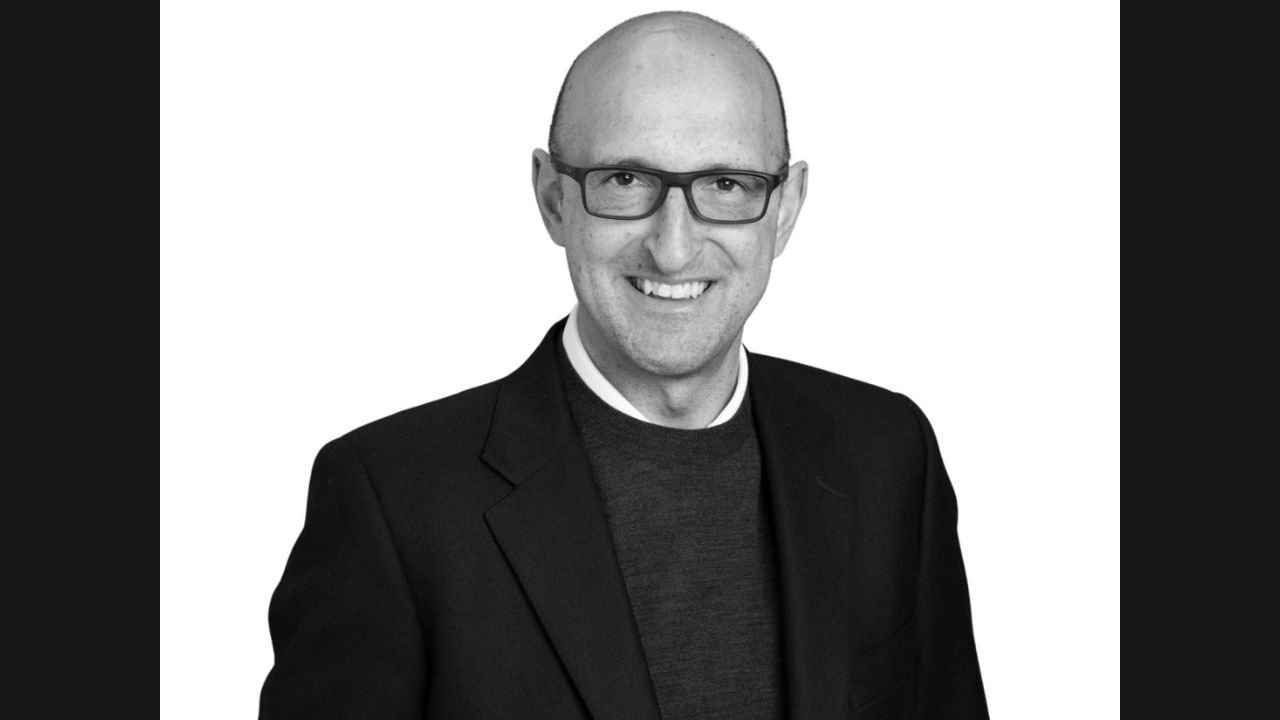
The landscape of high performance, leadership, and human psychology continues to evolve rapidly as we move through 2026. At the center of this intellectual revolution is Matthew Syed, a figure whose work has fundamentally reshaped how we view talent and failure. From his early days as an Olympic athlete to his current status as a global thought leader, he remains a vital voice for change. His insights into cognitive diversity and growth mindsets provide a necessary roadmap for navigating the complexities of the modern world.
In April 2026, the demand for his expertise in organizational culture and systemic innovation has reached new heights. He continues to challenge traditional notions of “innate talent,” arguing instead for the transformative power of purposeful practice and diverse thinking. Therefore, understanding the current impact of Matthew Syed requires a deep dive into his latest projects, his evolving consultancy work, and his enduring influence on public policy.
The Growth Mindset Revolution in 2025 and 2026
The concept of the “growth mindset” has moved from a psychological theory into a core business imperative over the last year. Matthew Syed has been instrumental in this transition through his firm, Matthew Syed Consulting. In 2025, his team launched a groundbreaking “State of Team Effectiveness 2026” report, which analyzed thousands of leadership teams across various industries. This report highlighted that the most successful organizations are those that prioritize psychological safety and the ability to learn from small errors.
During early 2026, he has focused on helping leaders navigate what he calls “complex volatility.” He argues that in an era of rapid technological change, the old model of the “heroic leader” is dead. Instead, he advocates for a more humble, inquisitive style of leadership that leverages the collective intelligence of the group. Consequently, his workshops on “Humble Leadership” have become essential training for senior executives at global corporations.
Furthermore, he has integrated advanced psychometric tools, such as the “Mindset Advantage,” to provide measurable data on organizational culture. These tools allow companies to see exactly where their “blind spots” are located. For example, a major financial institution recently used his methodology to restructure its risk management department after identifying a lack of cognitive diversity. As a result, the institution saw a significant uplift in innovation and a reduction in systemic errors.
New Literary Contributions: Untitled Collected Columns 2
A major milestone for the year is the release of his latest book project, tentatively titled Untitled Collected Columns 2. Scheduled for a major launch in mid-2025 with ongoing tours into 2026, this volume gathers his most provocative and influential writings from The Times. The book explores the intersection of sport, politics, and social psychology, providing a sharp critique of current global trends.
In these essays, Matthew Syed addresses the growing polarization in public discourse and the danger of “echo chambers.” He suggests that the refusal to engage with opposing viewpoints is not just a social problem but a cognitive one that limits our ability to solve complex problems. Therefore, the book serves as both a reflection on his career as a journalist and a call to action for a more open-minded society.
Moreover, the success of his previous books like Black Box Thinking and Rebel Ideas continues to fuel his 2026 speaking tour. He uses these established frameworks to explain why some cultures thrive while others stagnate. For instance, in his recent talks, he has drawn parallels between the aviation industry’s safety record and the need for similar “open loop” systems in the medical profession. This ability to cross-pollinate ideas across different fields remains his greatest strength.
Matthew Syed and the Evolution of Cognitive Diversity
In 2026, the term “cognitive diversity” has become a buzzword, but Matthew Syed ensures it remains a practical tool for performance. He distinguishes between demographic diversity and cognitive diversity, explaining that the latter is about the variety of perspectives and mental models within a group. He argues that a team of people who look different but think the same will still fall victim to “collective blindness.”
To address this, he has developed the “Assumption Reversal” technique, which he introduced to several high-stakes project teams in early 2026. This method forces teams to identify their most cherished assumptions and systematically challenge them. For example, during a consultancy session with a renewable energy firm, this technique led to a breakthrough in battery storage technology by questioning a basic chemical assumption that had been held for decades.
In addition, he has been a vocal critic of “toxic positivity” in the workplace. He believes that true growth requires an honest confrontation with failure. In his 2026 podcasts and articles, he emphasizes that being “nice” is not the same as being “effective.” A truly high-performing team is one where people feel safe enough to disagree and provide robust, respectful feedback. This shift in focus from “comfort” to “challenge” is a defining feature of his current work.
The Impact of Elite Sport on Modern Leadership
The background of Matthew Syed as an international table tennis champion continues to inform his perspective in 2026. He often uses sporting analogies to explain the “marginal gains” theory, which suggests that small, incremental improvements can lead to massive competitive advantages. During the lead-up to major international sporting events this year, he has worked with coaching staff to embed growth mindset principles into their training programs.
He explains that in elite sport, the difference between winning and losing is often found in the quality of the “debrief.” By creating an environment where athletes can speak honestly about their mistakes without fear of punishment, teams can correct course much faster. Consequently, his influence is felt not just in the boardroom but also on the training pitch and the Olympic stage.
Mentoring and Educational Advocacy in 2026
Education remains a subject close to the heart of Matthew Syed. In 2025 and 2026, he has expanded his “Dare to Be You” initiative, which aims to build confidence and resilience in schoolchildren. He believes that the education system must move away from a fixed-ability mindset that labels children as “bright” or “struggling” at a young age.
He has collaborated with several educational trusts to implement “growth mindset journals” into the daily curriculum. These tools help children track their progress and see their mistakes as opportunities for learning rather than reasons for shame. In addition, he has hosted webinars for parents on how to praise effort rather than results. By fostering these habits early, he hopes to create a generation of lifelong learners who are equipped for the challenges of the future.
Navigating Complexity in a Volatile World
As we move deeper into 2026, the theme of “Navigating Complexity” has dominated the work of Matthew Syed. He argues that we are living in a world where the problems we face—such as climate change, AI ethics, and global instability—cannot be solved by any one individual or discipline. Therefore, the ability to build and lead “rebel teams” is the most valuable skill of the 21st century.
He has been a keynote speaker at several technology summits this year, where he discussed the ethical implications of algorithmic bias. He warns that if the teams building AI lack cognitive diversity, the resulting systems will mirror and amplify our own social prejudices. As a result, he has become an advisor to tech firms looking to build more inclusive and robust development processes.
Furthermore, he has advocated for a more “scientific” approach to public policy. He believes that governments should treat their initiatives as experiments, with clear feedback loops and the courage to admit when a policy is not working. In his 2026 columns, he has praised local authorities that have adopted “black box” principles to improve social services and urban planning. This commitment to evidence-based decision-making is a core part of his advocacy.
The Continuing Success of the Sideways Podcast
In 2025 and 2026, the Sideways podcast has seen its most successful seasons yet. Matthew Syed uses this platform to explore the “hidden ideas” that shape our lives. The show combines storytelling with deep psychological research, taking listeners on a journey through history, science, and culture. Recent episodes have covered topics such as the psychology of conspiracy theories and the evolutionary roots of cooperation.
The podcast has attracted a global audience of millions, further extending his reach beyond the UK. He frequently interviews world-renowned scientists and historians, providing a space for nuance and complexity that is often missing from mainstream media. For instance, a two-part special on the “Architecture of Innovation” provided a detailed look at how physical spaces can foster or stifle creative thinking. This multi-media approach ensures that his ideas remain accessible to a wide variety of people.
Promoting Psychological Safety in the Public Sector
The work of Matthew Syed Consulting has seen a significant increase in public sector engagements in 2026. He has worked with various government departments to build cultures where civil servants feel empowered to speak truth to power. He argues that in the public sector, the “fear of the front page” often leads to a culture of blame and cover-up.
By implementing “psychological safety workshops,” he has helped these departments move toward a “just culture” model. This model recognizes that while gross negligence must be punished, honest mistakes should be shared and analyzed to prevent their recurrence. For example, a recent project with a regional health board led to a 20% reduction in surgical errors by improving the communication flow between senior surgeons and junior staff.
Matthew Syed as a Voice for Social Cohesion
In an increasingly divided world, Matthew Syed has positioned himself as a voice for social cohesion. He believes that cognitive diversity is not just about performance; it is also about the health of our democracy. In 2026, he has been involved in several community-led initiatives that bring people from different political and cultural backgrounds together for productive dialogue.
He argues that we must reclaim the “art of disagreement.” Instead of seeing those with different views as enemies, we should see them as “detectors of our own errors.” This philosophy of “intellectual humility” is central to his recent public appearances. By encouraging people to listen as much as they talk, he hopes to build a more resilient and empathetic society.
Conclusion: The Enduring Impact of Matthew Syed
In conclusion, Matthew Syed remains one of the most influential thinkers of the mid-2020s. His work across journalism, consultancy, and literature continues to provide profound insights into the human condition. Whether he is advising a global CEO or a classroom teacher, his message remains the same: our potential is not fixed, and our failures are our greatest teachers.
His commitment to growth mindsets, cognitive diversity, and psychological safety has fundamentally changed how we think about success. In 2025 and 2026, he has successfully adapted his core principles to address the unique challenges of a volatile and complex world. Furthermore, his ability to translate high-level psychological research into practical, everyday strategies makes his work accessible and life-changing.
As we look toward the remainder of 2026 and beyond, the influence of Matthew Syed is likely to grow even further. He reminds us that in a world of machines and data, it is our “human” qualities—our curiosity, our empathy, and our ability to learn—that will ultimately define our success. For anyone seeking to unlock their true potential or build a more innovative organization, his work is an essential and timeless guide. He has proven that with the right mindset, even the most difficult obstacles can be turned into stepping stones for growth.
READ MORE: Andrew Castle: A Detailed Look at His Life and Career in 2025-2026
